Posterior cervical foraminotomy: what it is, when it is indicated, and what recovery is like
Pain that starts in the neck and radiates toward the shoulder, arm, forearm, or hand may be due to compression of a cervical nerve. This condition is known as cervical radiculopathy. In some patients, when conservative treatment is not enough or there is progressive weakness, surgery may be needed to free the nerve.
One of the surgical options is posterior cervical foraminotomy, a procedure that decompresses the nerve root through the back of the neck, generally without the need to fuse the spine.
What is a posterior cervical foraminotomy?
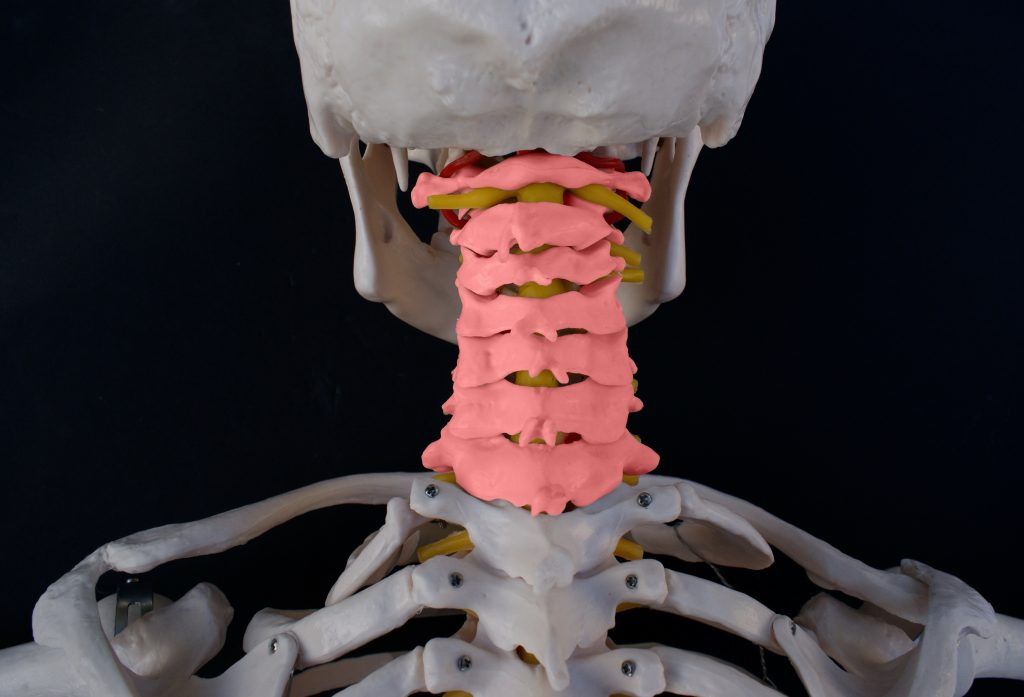
The cervical spine is made up of the neck vertebrae. Between each vertebra, nerves exit and travel toward the shoulders, arms, and hands. These nerves leave through small tunnels called foramina.
When one of these tunnels narrows, the nerve can become compressed. This can cause pain, tingling, numbness, or weakness in the arm.
Posterior cervical foraminotomy is a surgery that aims to enlarge that space and free the compressed nerve. It is called “posterior” because the approach is performed through the back of the neck.
What problem does this surgery treat?
Posterior cervical foraminotomy is used mainly to treat cervical radiculopathy, which occurs when a nerve root in the neck is irritated or compressed.
The most common causes are:
- A cervical disc herniation in the lateral or foraminal recess.
- Foraminal stenosis, that is, narrowing of the tunnel through which the nerve exits.
- Bone overgrowth or “bone spurs,” whose medical term is marginal osteophytes, due to spinal wear.
- Arthrosis of the cervical joints.
- Localized compression of a nerve root from disc bulging, uncovertebral arthrosis, or hypertrophy of the ligamentum flavum.
The goal of surgery is to relieve pressure on the nerve to improve arm pain, the tingling sensation, and strength.
What symptoms can a compressed cervical nerve cause?
Symptoms depend on the affected nerve. They may include:
- Neck pain.
- Pain that radiates down to the shoulder, arm, forearm, or hand.
- An electric-shock sensation.
- Tingling or numbness.
- Decreased strength.
- Difficulty carrying objects.
- Pain that worsens when moving the neck.
- A burning or stabbing sensation in the arm.
- Altered reflexes.
In many cases, arm pain is more intense than neck pain.
When is a posterior cervical foraminotomy considered?
Not all patients with neck pain need surgery. At first, many cases can be treated with medication, physical therapy, relative rest, activity modification, and injections.
Surgery may be considered when:
- Arm pain is severe and does not improve with conservative treatment.
- There is progressive weakness.
- There is clear compression of a nerve root on MRI.
- Symptoms match the affected level on imaging studies.
- There is significant limitation in working, sleeping, or performing daily activities.
- The compression is localized to one side of the spine.
- It is desirable to preserve motion of the cervical segment, when the case allows it.
The decision must be individualized. We do not operate on an image alone; we treat the patient, their symptoms, and the correlation with the studies.
In which cases may it not be the best option?
Although it is a useful technique, it is not suitable for all patients. It may not be the best alternative when there is:
- Significant compression of the spinal cord from the center of the canal.
- Degenerative cervical myelopathy.
- Cervical spine instability.
- Significant cervical deformity.
- Predominantly mechanical neck pain without clear radicular pain.
- A large central disc herniation.
- Compression that is better resolved through an anterior approach.
- A need for cervical reconstruction or fusion.
In these cases, the neurosurgeon may consider other options, such as anterior cervical discectomy and fusion, cervical disc replacement, laminectomy, laminoplasty, or other procedures.
How is the surgery performed?
The surgery is performed in the operating room under general anesthesia. The patient is positioned face down or in a special position to access the back of the neck.
In general terms, the steps are:
- A small incision is made at the back of the neck.
- The muscles are carefully separated to reach the affected area.
- With the help of a microscope, loupes, or specialized instruments, the correct level is located.
- A small portion of bone and tissue narrowing the foramen is removed.
- The compressed nerve root is freed.
- If there is a lateral disc fragment compressing the nerve, it can be removed.
- It is confirmed that the nerve has enough space.
- The wound is closed in layers.
The technique can be performed conventionally or minimally invasively, depending on the case, the patient’s anatomy, and the surgeon’s experience.
Does posterior cervical foraminotomy use plates or screws?
In most cases, it does not require plates, screws, or an interbody cage. One of its advantages is that it can free the nerve while preserving motion of the cervical segment.
However, if there is instability, deformity, advanced wear, or a need to remove too much bony structure, surgery with fusion may need to be considered. This depends on each patient.
What is the difference compared with anterior cervical surgery?
In anterior cervical surgery, the approach is performed through the front of the neck. In many cases the disc is removed and a graft, cage, or plate is placed to fuse the segment.
In posterior cervical foraminotomy, the approach is through the back of the neck, and the goal is to free the nerve without completely removing the disc or fusing the level.
Both techniques are useful, but they have different indications. The choice depends on the location of the compression, the type of herniation, the degree of wear, cervical alignment, the presence of instability, and the patient’s symptoms.
Expected benefits
The potential benefits of posterior cervical foraminotomy are:
- Relief of pain radiating into the arm.
- Improvement of tingling or numbness.
- Recovery of strength if the nerve has no irreversible damage.
- Direct decompression of the nerve root.
- Preservation of cervical motion.
- Avoiding a fusion in selected patients.
- A relatively small incision.
- Progressive functional recovery.
The symptom that usually improves fastest is pain radiating into the arm. Tingling, sensation, and strength may take longer to recover, especially if the nerve had been compressed for a long time.
Risks and possible complications
Every surgery carries risks. Although posterior cervical foraminotomy is usually safe in well-selected patients, complications may occur, such as:
- Bleeding.
- Infection.
- Wound pain.
- Cervical muscle pain.
- Persistent pain.
- Recurrence of symptoms.
- Injury to a nerve root.
- Spinal cord injury, although it is uncommon.
- Cerebrospinal fluid leak.
- Cervical instability.
- Need for another surgery.
- Future need for cervical fusion.
- Anesthesia-related complications.
The exact risk depends on age, associated illnesses, the operated level, the degree of compression, anatomy, smoking, bone quality, and other individual factors.
What is recovery like?
Recovery varies from one patient to another. Some patients walk the same day or the next day. The hospital stay may be short, depending on the patient’s progress and medical judgment.
During the first few days it is common to have:
- Pain at the back of the neck.
- A sensation of stiffness.
- Muscle discomfort.
- Pain around the wound.
- Fatigue.
- Transient tingling from nerve irritation.
Arm pain may improve soon, but full nerve recovery can take weeks or months.
Care after surgery
After surgery, the patient should follow their surgeon’s specific instructions. In general, it is recommended to:
- Keep the wound clean and dry.
- Avoid lifting heavy objects during the first few weeks.
- Avoid abrupt neck movements.
- Walk progressively.
- Take the prescribed medications.
- Avoid self-medication.
- Attend follow-up appointments.
- Start physical therapy only when the doctor authorizes it.
- Avoid driving until medically cleared.
- Not smoke, since tobacco can affect recovery.
A cervical collar is not always necessary. Its use depends on the type of surgery, the stability of the spine, and the surgeon’s preference.
When can I return to work?
It depends on the type of work and the patient’s progress.
Office jobs may require less recovery time than physically demanding jobs. Activities that involve lifting weight, driving for many hours, repetitive neck movements, or intense physical effort may require more time before returning.
Return to work should be decided in consultation, considering pain, mobility, strength, healing, and the type of activity.
Warning signs after surgery
You should contact your doctor or go to the emergency department if you have:
- Fever.
- Pus or fluid draining from the wound.
- Progressive redness of the wound.
- Pain that worsens significantly.
- New weakness in an arm or leg.
- Progressive loss of sensation.
- Difficulty walking.
- Loss of bladder or bowel control.
- Severe and persistent headache.
- Difficulty breathing.
- Significant neck swelling.
- A seizure.
- Drowsiness, confusion, or neurological deterioration.
Frequently asked questions
Does posterior cervical foraminotomy cure a herniated disc?
The surgery aims to remove or reduce the cause of nerve compression. If there is a lateral disc fragment compressing the root, it can be removed. However, the spine may continue to develop degenerative changes over time.
Is neck motion lost?
Generally no. One advantage of this surgery is that it can preserve motion of the segment, since it does not always require fusion. Even so, final mobility depends on the prior condition of the spine, pain, rehabilitation, and muscle condition.
Can the pain come back?
Yes, there is a possibility of recurrence or persistence of symptoms. This can occur due to scarring, a new herniation, progression of wear, or residual compression. That is why follow-up is important.
Does the tingling disappear immediately?
Not always. Pain usually improves before sensation. Tingling and numbness may take longer because the nerve needs time to recover.
Is it a high-risk surgery?
It is a delicate surgery because it is performed near nerves and the spinal cord. However, in well-selected patients and with proper technique, it can be an effective option to relieve radicular compression.
Is an MRI always needed?
MRI is one of the most important studies for evaluating discs, nerves, the spinal cord, and soft tissues. In some cases, a CT scan, dynamic X-rays, or nerve conduction studies may also be requested.
Conclusion
Posterior cervical foraminotomy is a surgery designed to free a compressed nerve root in the neck. It can be a good option in patients with pain radiating into the arm, tingling, or weakness caused by compression localized to one side of the cervical spine.
Its main advantage is that it allows the nerve to be decompressed and, in many cases, preserves motion of the segment without the need for fusion. However, not all patients are candidates. Evaluation by a spine specialist is essential to choose the safest and most appropriate treatment.
Final message for the patient
Neck pain that radiates into the arm should not be ignored, especially if it is accompanied by weakness, loss of sensation, or significant limitation. An early evaluation makes it possible to identify the cause, start treatment, and prevent progressive neurological damage.
This text is informational and does not replace a medical consultation. If you have neck pain with symptoms radiating into the arm or hand, see a neurosurgery and spine specialist for a personalized evaluation.