Trigeminal neuralgia: symptoms, causes, and medical and surgical treatment options
Trigeminal neuralgia is a neurological condition that causes episodes of intense, sudden, and usually short-lasting facial pain. Many people describe it as an electric shock, a jolt of current, a deep stabbing, or a “whiplash”-type pain in the face.
Although it can be very disabling, effective treatments exist. In many patients, management begins with medication; in others, when the pain is not controlled or the medications cause significant side effects, surgical treatment may be considered.
This article clearly explains what trigeminal neuralgia is, why it occurs, how it is diagnosed, and what the main treatment options are.
What is the trigeminal nerve?
The trigeminal nerve is one of the main nerves of the face. It is called “trigeminal” because it has three main branches:
- Ophthalmic branch. Provides sensation to the forehead, anterior scalp, upper eyelid, and the area around the eye.
- Maxillary branch. Provides sensation to the cheek, upper lip, upper gum, upper teeth, nose, and the middle part of the face.
- Mandibular branch. Provides sensation to the jaw, lower lip, lower gum, lower teeth, and part of the tongue. It also participates in some muscles of chewing.
Trigeminal neuralgia occurs when this nerve transmits abnormal pain signals.
What does trigeminal neuralgia feel like?
The pain usually has very particular characteristics:
- Sudden and intense pain.
- An electric-shock sensation.
- A stabbing, burning, or jolt-like pain.
- Attacks lasting from seconds to a few minutes.
- Pain on one side of the face.
- It may repeat many times a day.
- It may appear when touching the face, speaking, chewing, or brushing the teeth.
- It may occur in periods, with phases of improvement and relapse.
- In some patients there is background pain between attacks.
The intensity of the pain can be so high that the patient avoids eating, speaking, brushing their teeth, shaving, or touching their face.
Areas where the pain can appear
Neuralgia can affect one or several branches of the trigeminal nerve. The most frequent sites are the cheek, the jaw, the gum, the teeth, the upper or lower lip, the nose, the forehead, and the region around the eye.
It is common for it to be confused with dental pain at first. Some patients receive dental treatments before reaching the correct diagnosis.
What can trigger an attack?
In many people, everyday activities can trigger the pain. These areas or actions are known as “triggers.” The most frequent triggers are:
- Brushing the teeth.
- Chewing.
- Speaking.
- Smiling.
- Yawning.
- Touching the face.
- Shaving.
- Applying makeup.
- Cold air on the face.
- Drinking cold or hot liquids.
- Eating.
- Touching a specific area of the cheek, lip, or nose.
Not all patients have the same triggers.
Why does trigeminal neuralgia occur?
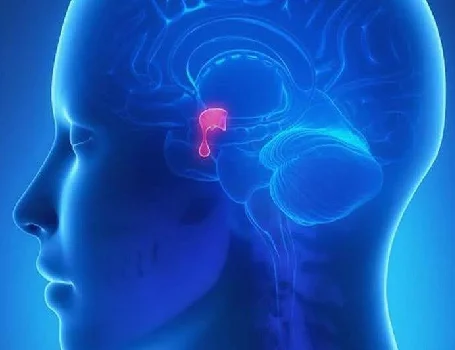
The most frequent cause is compression of the trigeminal nerve by a blood vessel near its entry into the brainstem. This contact can irritate the nerve and cause it to transmit pain signals abnormally. However, not all cases are the same.
Types of trigeminal neuralgia
- Classic trigeminal neuralgia. It is the best-known form. It is generally related to vascular contact or compression of the trigeminal nerve. It usually produces electric-shock-like pain that is brief, intense, and repetitive.
- Secondary trigeminal neuralgia. It occurs when another disease affects the nerve. Some causes may be multiple sclerosis, tumors near the nerve, vascular malformations, inflammatory lesions, skull base lesions, or sequelae of trauma or surgery. In these cases, in addition to controlling the pain, the underlying cause should be treated when possible.
- Idiopathic trigeminal neuralgia. This term is used when no clear cause is identified on imaging studies.
Is it the same as dental pain?
No. Trigeminal neuralgia can feel like pain in the teeth or gums, but its origin is in the trigeminal nerve, not necessarily in a tooth.
Neuralgia should be suspected when the pain is electric-shock-like, lasts seconds, appears in repeated attacks, is triggered by touching the face or chewing, is located in a nerve distribution, does not improve after appropriate dental treatments, and appears and disappears abruptly.
A dental evaluation may be necessary to rule out dental causes, but if the pattern is typical of neuralgia, a neurological or neurosurgical evaluation is also required.
How is it diagnosed?
The diagnosis is based mainly on the clinical history. The way the patient describes the pain is very important. The doctor will ask where the pain is located, how it feels, how long each attack lasts, what triggers it, whether it affects one or both sides, whether there is continuous pain between attacks, whether there is facial numbness, whether there is a history of multiple sclerosis, tumors, or surgeries, which medications have been used, and which dental treatments have been performed.
A neurological examination is also carried out to assess facial sensation, strength, reflexes, hearing, balance, and other cranial nerves.
Imaging studies
In most patients, a brain MRI is recommended, ideally with special sequences to evaluate the trigeminal nerve. The MRI helps identify vascular contact with the nerve, tumors, multiple sclerosis, vascular malformations, skull base lesions, brainstem abnormalities, and other causes of facial pain.
In some cases, MR angiography, CT, or additional studies may also be requested depending on the clinical suspicion. The MRI does not always “confirm” the diagnosis on its own; it must be interpreted together with the patient’s symptoms.
Medical treatment
Initial treatment is usually with medication. The goal is to reduce the frequency and intensity of attacks. Medications must be prescribed and adjusted by a doctor, since they may require monitoring of side effects, interactions, and laboratory tests.
- Carbamazepine. It is one of the classic and most widely used medications for trigeminal neuralgia. It works by stabilizing the abnormal electrical activity of the nerve. It can be very effective, but it can also cause side effects such as drowsiness, dizziness, nausea, sodium abnormalities, changes in blood tests, or interactions with other medications. For this reason, it should not be started or stopped without medical guidance.
- Oxcarbazepine. It is a frequent alternative. It has a similar mechanism and may be better tolerated in some patients. It can also cause drowsiness, dizziness, or a decrease in blood sodium, so it requires monitoring.
- Gabapentin or pregabalin. They can be used in some patients, especially when there is a continuous neuropathic pain component or when other medications are not tolerated. They are not always as effective as carbamazepine or oxcarbazepine for typical shock-like pain, but they can be useful in selected cases.
- Lamotrigine and other medications. In patients with pain that is difficult to control, the specialist may consider other drugs or combinations.
The choice depends on age, associated illnesses, prior medications, adverse effects, the type of pain, and the response to treatment.
What happens if the medication works?
If the medication controls the pain well and the patient tolerates it, it can be maintained under medical follow-up. The doctor can adjust the dose, monitor side effects, and decide whether at some point it can be gradually reduced. It is not recommended to stop it abruptly without supervision, as the pain may relapse.
What happens if the medication does not work?
A new evaluation should be considered if the pain persists despite appropriate treatment, the patient requires increasingly higher doses, there is drowsiness, dizziness, or intolerable side effects, the pain prevents eating, speaking, or sleeping, there are very frequent attacks, there is a decline in quality of life, the MRI shows clear vascular compression, or a secondary cause is suspected. In these cases, surgical treatment may be considered.
Surgical treatment
Surgery is not the same for all patients. Different options exist, and each has distinct benefits, risks, and goals. The choice depends on the patient’s age, general state of health, the type of neuralgia, MRI findings, the presence of vascular compression, the response to medication, anesthetic risk, the duration of symptoms, patient preferences, and the experience of the treating team.
1. Microvascular decompression
Microvascular decompression is a surgery that aims to separate the blood vessel compressing the trigeminal nerve. It is an especially important option in patients with classic neuralgia and evidence of vascular contact or compression.
In general terms, general anesthesia is used, with an incision behind the ear and a small opening in the skull. Using a microscope, the neurosurgeon identifies the trigeminal nerve, locates the vessel compressing it, separates it from the nerve, places a protective material between the vessel and the nerve, and closes the wound in layers. The goal is to relieve pressure on the nerve without intentionally injuring it.
Among its potential advantages, it can offer lasting relief, treats the cause when there is vascular compression, does not aim to destroy the nerve, has a lower risk of facial numbness than some ablative techniques, and can be very effective in well-selected patients.
Like any intracranial surgery, it carries risks, which may include bleeding, infection, cerebrospinal fluid leak, decreased hearing, dizziness or vertigo, injury to cranial nerves, facial numbness, persistence or recurrence of pain, anesthetic complications, and uncommon but serious neurological risks. An individual evaluation should be performed to estimate risks and benefits.
2. Radiofrequency rhizotomy
It is a percutaneous procedure, which means it is performed with a needle, without open surgery behind the ear. The needle is inserted through the cheek toward an area of the trigeminal nerve called the Gasserian ganglion. Controlled heat is then applied to lesion specific nerve fibers that transmit pain.
Among its potential advantages, it does not require a craniotomy, can relieve pain quickly, can be useful in older patients or those at high surgical risk, and allows partial selection of the affected branch. Its possible risks include facial numbness, facial pain of the dysesthesia type, weakness in chewing, recurrence of pain, corneal injury if eye sensation is affected, and the need to repeat the procedure.
3. Balloon compression
It is another percutaneous procedure. A needle is inserted to the Gasserian ganglion and a small balloon is inflated to selectively compress nerve fibers. It may be considered in patients at high risk for open surgery, with pain that is difficult to control, with neuralgia in specific branches, or in cases where a less invasive option than microvascular decompression is sought. Its possible risks include facial numbness, weakness in chewing, residual pain, recurrence, and sensory disturbances.
4. Glycerol rhizolysis
In this procedure, glycerol is injected near the trigeminal ganglion to partially lesion the pain fibers. It can help in selected patients, although relief may be temporary and there is a possibility of recurrence.
5. Stereotactic radiosurgery
Radiosurgery, such as Gamma Knife or other systems, directs precise radiation at the trigeminal nerve. It does not require an incision or general anesthesia in many cases. The goal is to reduce the abnormal transmission of pain.
Among its potential advantages, it does not require open surgery, can be an option in patients at high surgical risk, is outpatient in many cases, and can be useful when invasive procedures are to be avoided. As limitations, relief is not always immediate, may take weeks or months to take effect, there is a risk of recurrence, it can cause facial numbness, and it is not always the best option if quick relief is sought.
Which surgery is best?
There is no single answer for everyone. In general terms, microvascular decompression is usually considered in patients in good general condition and with clear vascular compression; percutaneous techniques can be useful in older patients, those at high surgical risk, or those seeking less invasive procedures; and radiosurgery can be an option in selected patients who are not candidates for open surgery or who prefer to avoid an invasive procedure. The best option depends on the type of neuralgia and a personalized evaluation.
Conservative treatment and daily care
Although trigeminal neuralgia usually requires medical treatment, some measures can help reduce triggers and improve quality of life: identifying trigger zones, avoiding direct cold air on the face, using a scarf or facial protection in cold weather, eating soft foods during attacks, avoiding very cold or very hot drinks if they trigger pain, brushing gently, avoiding repeatedly manipulating the painful area, sleeping adequately, managing stress, keeping a record of attacks and medications, and attending regular medical follow-up.
These measures do not replace medical treatment, but they can help reduce stimuli that trigger pain.
When to seek urgent medical attention?
You should seek immediate attention if the facial pain is accompanied by weakness in an arm or leg, new facial paralysis, difficulty speaking, vision loss, double vision, confusion, fever, neck stiffness, a sudden and severe headache, seizures, progressive facial numbness, loss of balance, pain following trauma, or herpes or painful blisters on the face or eye. These signs may suggest other diseases that require urgent evaluation.
Frequently asked questions
Is trigeminal neuralgia dangerous?
It does not usually put life at risk, but it can be extremely painful and disabling. In addition, in some cases it can be secondary to another disease, so it is important to study it properly.
Is it cured with medications?
In many patients, medications control the pain for months or years. However, some people stop responding or develop side effects, and then surgical treatment is considered.
Does surgery guarantee that the pain will never return?
It cannot be guaranteed. Some surgeries offer prolonged relief, but recurrence may occur. The risk depends on the procedure, the type of neuralgia, and the patient’s characteristics.
Does microvascular decompression damage the nerve?
Its goal is to separate the vessel compressing the nerve, not to destroy the nerve. For this reason, it may have a lower risk of facial numbness than some ablative procedures, although it is not free of risks.
Is radiosurgery an open surgery?
No. Radiosurgery does not require opening the skull. It uses precise radiation directed at the nerve. Its effect may take longer than other procedures.
Why does it hurt as if it were a tooth?
Because the branches of the trigeminal nerve provide sensation to the teeth, gums, and jaw. That is why it can be confused with dental pain. If the pattern is electric, brief, and triggered by minimal stimuli, neuralgia should be suspected.
Can I have neuralgia on both sides?
It is less common, but it can occur, especially in some diseases such as multiple sclerosis. Classic neuralgia usually affects only one side.
Conclusion
Trigeminal neuralgia is a disease of the trigeminal nerve that causes intense, sudden, electric-shock-like facial pain. It can be confused with dental pain, but its origin is usually in irritation of the nerve.
Treatment generally begins with medications such as carbamazepine or oxcarbazepine, always under medical supervision. When the pain is not controlled, the side effects are significant, or there is clear vascular compression, surgical options may be considered, such as microvascular decompression, radiofrequency rhizotomy, balloon compression, glycerol rhizolysis, and radiosurgery. Each option has specific indications, benefits, and risks.
Evaluation by a specialist makes it possible to confirm the diagnosis, rule out secondary causes, and choose the most appropriate treatment for each patient.
Final message for the patient
Electric-shock-like facial pain should not be ignored, especially if it recurs, is triggered by touching the face, or prevents eating, speaking, or sleeping. A correct diagnosis can avoid unnecessary treatments and allow effective management.
This text is informational and does not replace a personalized medical consultation. If you have facial pain consistent with trigeminal neuralgia, see a neurology or neurosurgery specialist.