Understanding Spondylolisthesis: Information for Patients
Understanding Spondylolisthesis: Information for Patients
What is spondylolisthesis?
Spondylolisthesis occurs when a vertebra in the spine slips forward over the vertebra below it. Imagine your spine bones as stacked blocks. In spondylolisthesis, one block slides slightly forward out of its normal alignment.
What are the most common causes?
There are different types of spondylolisthesis, and the causes vary:
- Spondylolytic (isthmic): Stress fracture or fissure in the pars interarticularis; common in young athletes (gymnastics, football).
- Degenerative: Natural wear and tear of discs and joints in older adults, making vertebrae unstable.
- Dysplastic (congenital): Abnormal vertebral formation from birth, predisposing to slippage.
- Traumatic: Direct injury or fracture to the spine causing displacement.
- Pathological: Tumors, infections, or other diseases that weaken the spine.
- Post-surgical: Slippage after previous spine surgery (rare).
What are the symptoms?
Symptoms can range from mild to severe:
- Chronic lower back pain: Dull and constant, worsens with standing or walking.
- Stiffness: Difficulty bending or straightening up.
- Sciatica: Pain radiating to buttocks and legs if there’s sciatic nerve compression.
- Leg weakness: Difficulty walking.
- Numbness or tingling: Sensations in legs or feet.
- In severe cases: Loss of bladder or bowel control (medical emergency).
How is spondylolisthesis diagnosed?
- X-rays: Detect and measure slippage in different positions (standing, flexion, extension).
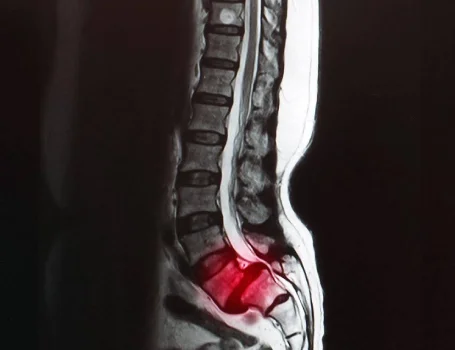
- Magnetic resonance imaging (MRI): Shows soft tissues, discs, and nerves to evaluate compression.
- Computed tomography (CT): Detailed images of bone fractures and pars interarticularis.
What are the treatment options?
Conservative treatment (non-surgical)
- Relative rest: Avoid activities that aggravate pain.
- Medications: Analgesics and anti-inflammatories to control pain and inflammation.
- Physical therapy: Strengthen lumbar and abdominal muscles; improve flexibility and posture.
- Brace or belt: External support to limit movement and relieve pain.
- Epidural steroid injections: Reduce inflammation and relieve nerve pain.
Surgery
Indicated if:
- Severe pain that doesn’t respond to conservative treatment.
- Significant slippage causing instability.
- Nerve compression with progressive weakness or loss of function.
- Loss of bladder or bowel control.
Common procedures:
- Spinal fusion: Joining vertebrae to stabilize the spine.
- Laminectomy: Removal of part of the vertebra to decompress nerves.
Conclusion
If you experience symptoms compatible with spondylolisthesis, seek timely medical evaluation. An accurate diagnosis and appropriate treatment plan will help you control pain and improve your quality of life. With proper management, many people lead active and functional lives. Don’t hesitate to consult your specialist to find the best solution for you!